
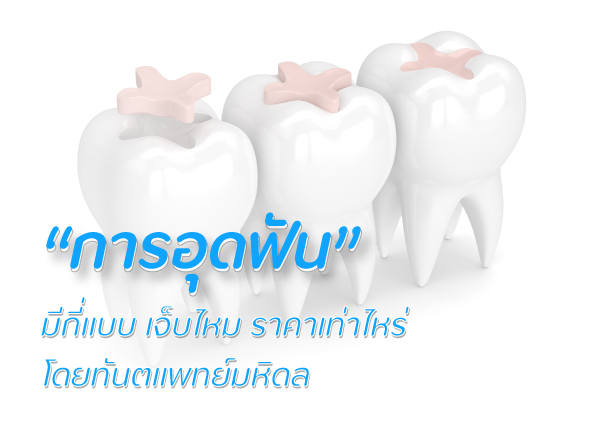
Toothache is something nobody wants to deal with, because it means a tooth is signaling that something is wrong, possibly after dental care has slipped. Whatever the symptoms, modern dentistry can help, and a filling is a way of stopping a small problem before it grows.

What Is a Dental Filling?
A dental filling (tooth filling) treats a damaged tooth by placing a synthetic material into it to replace the tooth structure that has been lost, whether from decay, wear or erosion. This filling material is what protects the tooth from further decay.
What Types of Filling Materials Are There?
Filling materials generally come in 2 types: metal-colored (silver amalgam) and tooth-colored (composite resin). Below is how each type looks, along with its pros and cons.
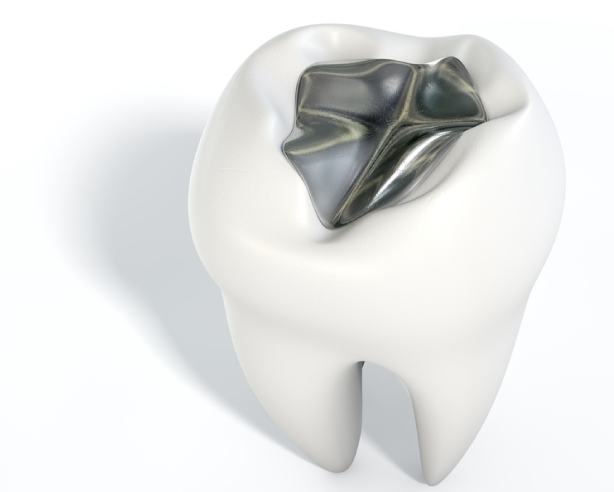
Metal (Amalgam) Fillings
A metal-colored filling, or amalgam filling, is easy to work with, quick and inexpensive. The material is a mix of mercury, silver, tin or other metals. Dentists mostly use it for molars, because its dark color is more visible than a composite filling, so it is not suitable for front teeth where appearance matters.
Advantages of metal fillings
- Inexpensive
- Durable and strong under chewing forces
- A simple procedure
Disadvantages of metal fillings
- The filling color is quite visible
- Not suitable for front teeth where appearance matters
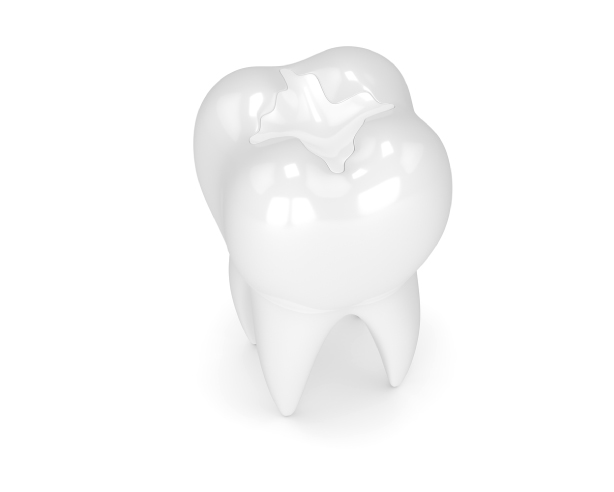
Tooth-Colored Fillings
A tooth-colored filling, or resin composite filling, looks natural and is widely used today. It can be used on both front teeth and molars. The procedure is more involved than for metal fillings because it needs a curing light. First, the dentist removes the decayed part of the tooth, then places the tooth-colored material, alternating with a curing light so the material hardens. Once it has hardened, the dentist trims and shapes the filling again so the tooth looks natural.
Advantages of tooth-colored fillings
- A natural look, matching the color of real teeth
- Suitable for both front teeth and molars
- The tooth can be used right away, with no need to avoid chewing on the filled side for 24 hours as with metal fillings
- Contains no mercury
Disadvantages of tooth-colored fillings
- Higher cost than metal fillings
- Less durable than metal fillings
- Stains more easily from tea, coffee or cigarettes

Why Do I Need a Filling?
Many people wonder why a cavity needs filling when the hole is as tiny as an ant hole. Small problems that we tend to overlook can become big ones if left alone. A small cavity can lead to more serious problems such as gum inflammation, abscesses, root damage, loose teeth or, in severe cases, tooth loss. That is why cavities need filling, and why gaps between teeth are closed with filling materials. The filling procedure may sound frightening, but it is an important way to protect your teeth.

How to Prepare for a Filling
- If you have a medical condition or take regular medication, always tell the staff and the dentist first.
- Brush your teeth and rinse your mouth at home before the visit to make the examination easier.
- Eat before your appointment, because with a metal filling you need to avoid chewing on the filled side for about 24 hours (you can drink water and eat soft food once the anesthetic wears off).

Dental Filling Steps
Does a filling hurt? It is one of the most basic questions, and most people feel some fear about dental visits. In reality, a filling is not as frightening as people imagine, and the steps are not as alarming as they sound. Here is what the procedure involves.
- The dentist checks the teeth to see how much decay there is and whether a filling can fix it.
- The dentist gives a local anesthetic (when the decay is deep and close to the nerve), then removes the decayed, infected part of the tooth and prepares the cavity for filling.
- After preparing the tooth, the dentist places the filling material in the cavity. This step differs between metal and tooth-colored fillings, as tooth-colored fillings also use a curing light.
- Once the filling is in place, the dentist polishes it so it looks good and is ready to use.
Patients interested in a consultation or a filling at Smile & Co. Dental Clinic, with its team of Mahidol University-trained dentists, can view the dentists’ profiles at Our Dental Team, or send questions through our contact page.

Dental Filling Cost
How much does a filling cost per tooth? Are tooth-colored fillings expensive? Do clinic and hospital prices differ much? These questions often shape the decision to get a filling. Here are the prices for metal and tooth-colored fillings.
Dental filling prices | |
Metal filling | From 700 THB |
Tooth-colored filling | From 1,000 – 3,000 THB |
Dental treatments such as extractions, fillings and scaling may be partly covered by Thailand’s Social Security scheme at public and private hospitals, and at clinics registered with the scheme. Coverage can change, so check with the provider first. People without Social Security can use the Universal Coverage (gold card) scheme instead. For those who have neither and are looking for a lower price, a public hospital is the cheaper option, though the drawback is a long wait.
If you would rather not wait, a dental clinic or private hospital is the alternative. If you are unsure, call the hospital or clinic directly to confirm.
Benefits of a Dental Filling
Filling a cavity or a gap means the tooth is kept and can be used normally again. In other words, a filling stops decay from spreading to the point where the tooth has to be extracted or the pulp becomes inflamed.
Drawbacks of a Dental Filling
Filling material can wear down or come loose, and the tooth may decay again. After a filling, keep up correct and regular brushing and cleaning.

Which Cases Need a Filling?
If you are wondering whether a molar with a hole, or a molar broken in half, can be filled, here are the cases that call for a filling. First, a molar with a hole can be filled, and it really should be, because molars do most of the chewing. If one of these main supports is damaged, it cannot do its job well.
What if the tooth has no hole but is cracked halfway? That can often be filled too. Holes, chips, cracks and breaks can often be treated with a filling, depending on how large the damage is. The dentist will tell you if another treatment suits the tooth better. What about gaps between teeth? A filling can help there as well.
The dentist fills the gaps with tooth-colored material shaped to the size of each tooth. Patients with a larger budget can choose veneers to close the gaps instead.

What to Expect After a Filling
- You may feel some sensitivity after the filling, which usually goes away by itself within 1–2 weeks.
- You may have some toothache. Pain relievers can help, but if the pain does not ease or anything feels unusual, see a dentist promptly.

Self-Care After a Filling
- With a metal filling, do not chew on or use the filled tooth for 24 hours so the material can harden and set fully.
- Avoid chewing hard foods to prevent the filling from breaking.
- Brush correctly with a soft-bristled toothbrush and gentle strokes, or clean with dental floss.
- Avoid very cold or very hot foods to reduce possible sensitivity.
- See your dentist every 6 months for a check-up.