

Dental Scaling
Dental scaling uses dental instruments to remove tartar lodged between the teeth, breaking it off with high-frequency vibration. The procedure is simple and fairly quick. How long it takes depends on how much tartar each patient has, and also on the scaling equipment the dentist uses.
Besides scaling, what else can make teeth whiter?
- Veneers, thin shells that cover the front of the teeth for a new smile
- Teeth whitening with Cool Light LED for a whiter, brighter smile
What Is Dental Scaling?
Dental scaling removes tartar lodged between the teeth with dental instruments that chip or scrape it away. The procedure is simple and does not take long. The time needed depends on the amount of tartar each patient has and on the dentist’s scaling equipment.

Tartar
What Is Tartar?
Tartar starts with bacteria that build up from food debris or protein residue left in the mouth, forming a sticky bacterial film. As this layer keeps building, it eventually hardens into tartar. Put simply, it comes from teeth that are not brushed clean. Apart from leaving the teeth unclean, it harms oral health and raises the risk of periodontal disease (gum disease) later on.
How Does Tartar Form?
Tartar, also called dental calculus, forms from plaque or food debris caught between the teeth. Over time it builds up and hardens on the teeth, along the gumline and at the edges of the teeth. In the early stage it can be brushed away with a toothbrush, ideally together with a fluoride toothpaste. Once it has hardened into tartar and turned yellow or brown, only a dentist can scrape it off.
Is Dental Scaling Worth It?
If you ask us, “I have tartar. Should I have it scaled?”, our answer is a clear “yes”. Letting tartar build up until the teeth turn yellow can make people self-conscious when they smile, and leaving it for a long time can lead to more oral health problems. If you are not sure what scaling does for you, here are the benefits.
Benefits of Dental Scaling
- Scaling lowers the risk of periodontal disease, from swollen and inflamed gums to inflammation around the tooth roots.
- It helps patients smile with more confidence and feel better about how they look, because there is no tartar or plaque to worry about, both of which make teeth look yellow.
- It helps teeth stay healthy for longer, which means a lower chance of losing them.
- Patients can chew with confidence and eat what they like, from ice cream to nuts and fruit, because their teeth stay strong.
- It lowers the chance of tooth decay and gum recession.
Those benefits show how much scaling supports oral health, and they are a good reason not to put it off. If you have a lot of tartar, or your teeth have yellowed to the point that it affects your confidence, we recommend seeing a dentist for scaling soon.
Besides scaling, what else can make teeth whiter?
- Veneers, thin shells that cover the front of the teeth for a new smile
- Teeth whitening with Cool Light LED for a whiter, brighter smile

Why Is Dental Scaling Needed, and Can You Skip It?
This is one of the questions we hear most often. Some people have a deep-seated fear of the dentist. They fear the needles, the instruments and the sensitivity that may follow. That fear is often the reason oral health problems build up, especially problems caused by tartar.
So, why is scaling needed, and can you skip it? The answer is no, you should not skip it. Tartar is one of the causes of periodontal disease and gingivitis (gum inflammation). In more serious cases it may also raise the risk of heart disease, because inflammatory substances can enter the bloodstream and trigger heart problems.
To repeat, if you have tartar, you need to see a dentist to have it removed. Patients who would rather not have scaling can reduce the causes of tartar by looking after their oral health: brushing regularly with a fluoride toothpaste and flossing.
That said, scaling is not something everyone can have whenever they like. There are limits on who can have scaling and who should avoid it.

Who Should Not Have Dental Scaling?
Scaling is not suitable for everyone. It has limits for people at risk of complications during scaling, for example:
- Patients with serious illnesses such as cancer, high blood pressure, diabetes, kidney failure, leukemia, liver disease or blood clotting disorders
- Patients whose condition may flare up during treatment, such as heart disease, since they may have chest pain, tire easily or have asthma symptoms. The vibration from the dental equipment may cause an irregular heartbeat.
- Patients with periodontal disease (gum disease) need a gum assessment first. Scaling and root planing are part of gum disease treatment, and the dentist decides which steps to do and in what order.
- Pregnant women can have scaling, but from 3 months of pregnancy onward they need to consult the dentist first, for the safety of mother and baby.
If any of these apply to you, tell the dentist before treatment. The dentist may need to check with your doctor or adjust the treatment plan to keep you safe. If none of them apply and you would like scaling, you can go ahead and schedule a visit with a dentist.

Where Should You Have Your Teeth Scaled?
Our recommendation is to have scaling at a hospital or a reputable dental clinic with a team of dentists who have specialist knowledge and skills, for good and safe results.
At Smile And Co Dental Clinic, scaling is carried out by Mahidol University-trained specialist dentists, who treat patients with honesty and care. You can read about each dentist’s background here: Smile And Co Dental Clinic dental team
Can You Remove Tartar Yourself?
Tartar lodged between the teeth cannot be removed at home, whether by brushing or flossing. If you have come across unsourced claims that vinegar or baking soda can remove tartar, please stop believing and sharing them. These methods do not remove tartar, and they damage the tissues in the mouth.
If you are thinking of scraping tartar off with a sharp object, please don’t. It is not worth the risk, and it does not help at all. Tartar has to be removed with dental instruments, by a trained professional.
You can still prevent tartar early on by using a fluoride toothpaste and flossing between the teeth. In short, you cannot scale your own teeth. Scaling has to be done by a qualified dentist.
Signs It’s Time for Dental Scaling
If you notice any of the following, it is a sign that you are due for scaling.
- Yellow teeth
- Bad breath
- Tartar on the necks and fronts of the teeth, leaving the surface rough
- Bleeding gums
If you have any of these signs, have your teeth scaled soon. Better still, see your dentist regularly so it does not get to that point.
How to Prepare for Your First Dental Scaling
For anyone seeing a dentist for the first time, here is how to prepare.
- First, look up the hospital or clinic where you plan to have scaling. Naturally, choose one with a good reputation.
- Check the fees, or compare prices between places, so you can budget correctly. If you have Thai social security coverage, check whether you can use it.
- Once you have done your research, get a good night’s sleep so you feel fresh and less anxious. Most importantly, brush your teeth before seeing the dentist.
- If you take antiplatelet medication or blood thinners, tell the dentist before your visit. Do not stop the medicine yourself. The dentist will check with the doctor who prescribed it if needed.
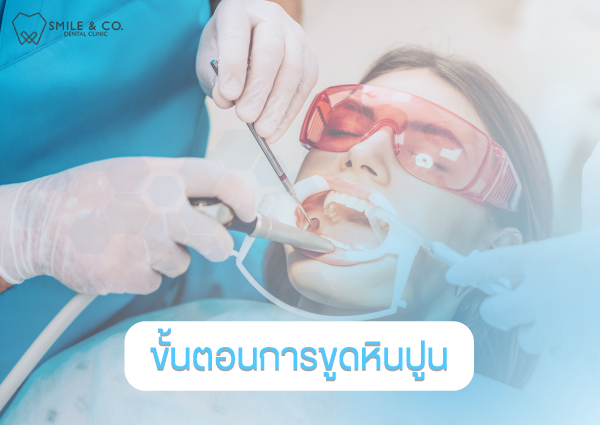
Dental Scaling Procedure, Step by Step
Each scaling session is fairly short. Here are the steps the dentist follows.
- First, the dentist examines your mouth for problems other than tartar, such as tooth decay or gum inflammation.
- If tartar is found, scaling starts right away. The dentist uses dental instruments to remove the tartar and the bacterial deposits around it. You may feel some sensitivity during this step. This is normal and goes away on its own.
- Once all the tartar is removed, the dentist polishes the teeth with an electric polishing brush and a special polishing paste to clean away any remaining tartar.
- To check for leftover tartar, the dentist flosses between the teeth again to clear out what is left. A little gum bleeding is possible at this stage.
- After flossing, you rinse your mouth again to wash away any small fragments of tartar.
- The last step is a fluoride treatment to help prevent tooth decay. The fluoride is poured into a tray shaped like a dental impression, and you bite on it for about 1–2 minutes. That completes the treatment.
As you can see, scaling at Smile And Co Dental Clinic is not as frightening as many people expect, and it keeps yellow teeth from affecting your confidence. There is no need to be afraid of having it done.
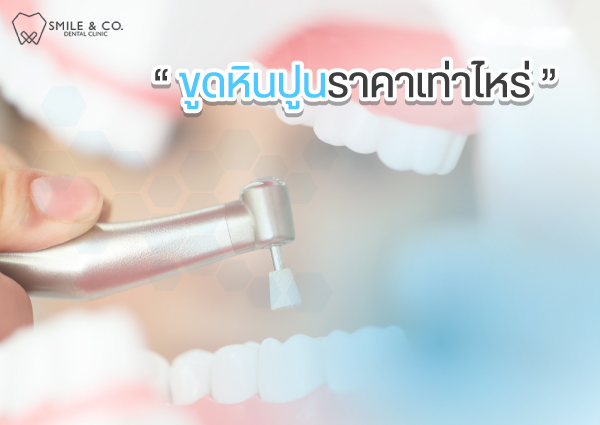
How Much Does Dental Scaling Cost?
Scaling prices vary between providers. Government hospitals usually charge less than dental clinics, at around 700–900 THB, while private hospitals charge around 800–2,000 THB.
There are also many clinics to choose from. At Smile And Co Dental Clinic, our scaling prices
are as follows.
Dental Scaling Prices
Scaling service | Price |
Scaling, starting price (depends on the amount of tartar) | 1,200–1,800 THB |
Scaling with Airflow | 1,800 THB |
GBT scaling (GBT PIEZON Scaling) | 2,500 THB |
GBT Airflow Cleaning | 3,000 THB |
Root planing (per jaw) | 3,000–6,000 THB |
If you have tartar, try not to let the cost put you off, because what follows from leaving it may cost more than this. As the saying goes, spend a little now or spend a lot later.
How Often Should You Have Your Teeth Scaled?
In the first period after scaling, patients should come back every 2–3 months for a check-up and cleaning. If you keep your teeth clean and have no gum inflammation or other problems, the dentist will schedule a check-up and scaling within 5–6 months to keep your mouth healthy. Patients with oral health problems or periodontal disease can have scaling every 3–4 months as ongoing treatment.
How to Reduce Tartar Buildup at Home
For better oral health, you can lower the chance of tartar forming with the following self-care.
As mentioned above, tartar cannot be removed at home, and we will say it again: do not scale your own teeth. You can still deal with the tartar that makes teeth yellow by stopping it before it starts, for example:
- Brush at least twice a day or after meals, and use a fluoride mouthwash or toothpaste to reduce bacteria and prevent tooth decay.
- Floss between the teeth and in the gaps a toothbrush cannot reach, to clear away food debris.
- Drink water regularly, including before bed and after waking up, to slow bacterial growth in the mouth.
- Avoid smoking, which causes yellow teeth and bad breath.
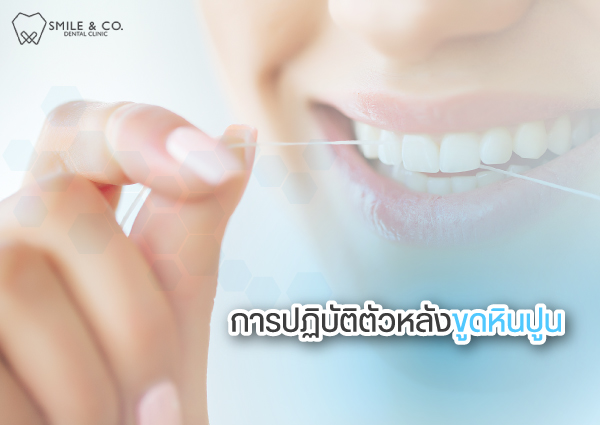
Aftercare Following Dental Scaling
Preparing for scaling matters, and aftercare matters just as much. Some people think that once scaling is done, nothing more is needed. In fact, poor oral care afterward can also lead to side effects. To lower the risk, follow these aftercare steps.
- Avoid strongly flavored food and drinks such as tea, coffee, soft drinks and alcohol, as they can make teeth yellow faster.
- Watch for inflammation or pus around the gums after scaling. If you notice either, see a dentist promptly, as it may be an infection.
- If your teeth feel sensitive, use a toothpaste for sensitive teeth. If it does not settle or gets worse, see a dentist for advice on brushing and on toothpaste made for sensitivity.
- If you have toothache, gum pain or swollen gums, take the pain relief or anti-inflammatory medication your dentist provides exactly as directed.
- If you had root planing or gum curettage, apply the gum medication and come back for suture removal or a check-up as the dentist schedules.
- See a dentist every 6 months for a check-up to keep your mouth healthy. Do not assume scaling is a one-time fix, as side effects such as infection can occur. Looking after your mouth well after scaling helps your teeth last for many years.
Can Dental Scaling Be Claimed Under Thai Social Security?
Thai social security may cover part of the cost of some dental treatments, including scaling. Coverage and eligibility rules can change, so please ask the clinic about current coverage before your visit.